Trip hazards from cracked or uneven paving: what to look for and fix
By Janice · Updated 2026-06-17
This is general safety guidance, not legal advice on liability, which depends on the specific circumstances of any incident.
A driveway or patio you walk across every day is easy to stop noticing, which is exactly how small trip hazards go unfixed for months. A raised block, a sunken slab, or a crack with any real height difference either side of it is worth taking seriously well before someone actually trips on it.
What actually counts as a hazard
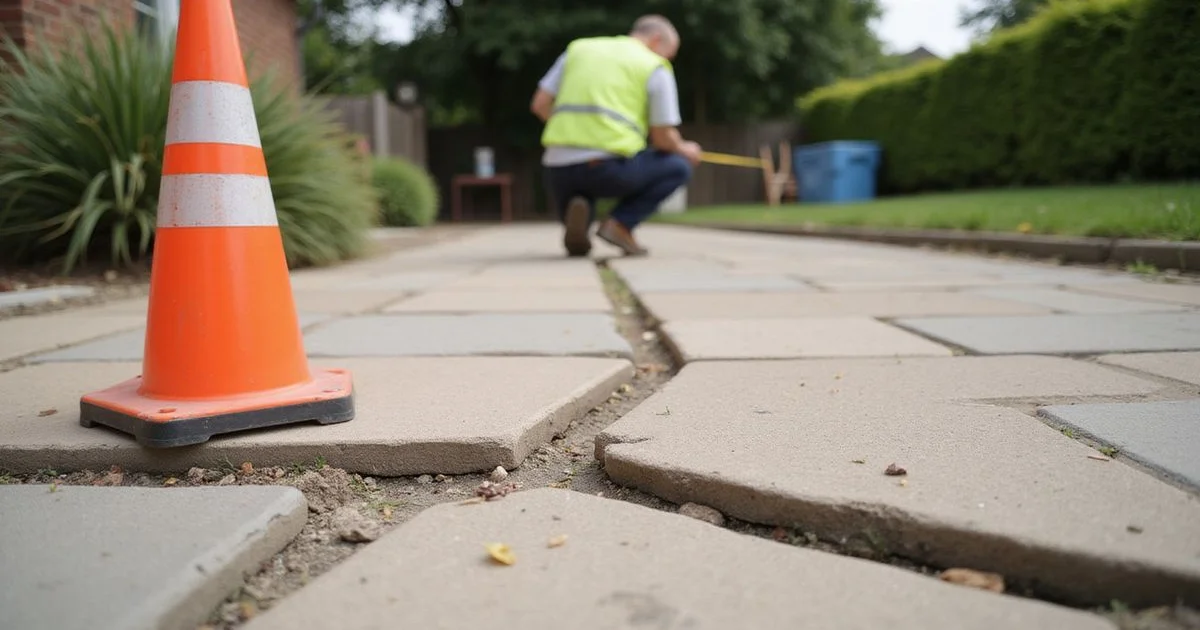
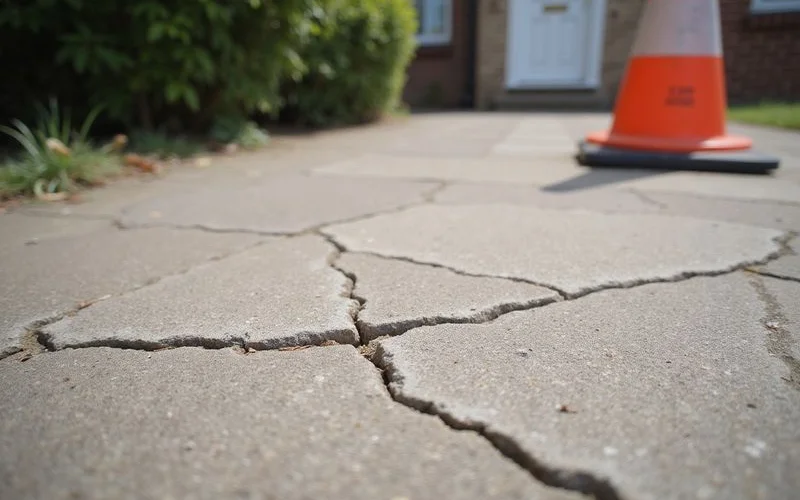
Not every crack or uneven joint is dangerous. The distinction that matters is height difference, not just visible damage. A hairline crack with a flat, level surface either side is mostly cosmetic. A raised or sunken edge you can catch a shoe toe on is a different matter, and it does not need to be dramatic to cause a fall, especially in the dark, in wet weather, or for anyone less steady on their feet.
| Situation | Risk level | What to do |
|---|---|---|
| Hairline crack, no height change | Low, mostly cosmetic | Monitor, reseal if it is letting water in |
| Small lip or dip, under a centimetre | Moderate | Flag it, plan a repair, avoid ignoring it through winter |
| Noticeable raised edge or sunken patch | High | Mark it clearly now, prioritise a repair |
| Multiple areas showing the same pattern | High, likely a base issue | Get it assessed properly rather than patching piecemeal |
Who is most at risk
Delivery drivers and postal workers cross your driveway daily, often carrying something and not looking down the whole time, and they are frequently the first people to encounter a hazard that has developed since their last visit. Elderly visitors, anyone with mobility issues, and children running rather than walking are all at higher risk from the same defect that a careful adult walking slowly might step over without noticing.
Quick checks you can do yourself
Walk the driveway and patio in daylight and run a hand or foot across any crack or joint that looks uneven. A torch held at a low angle in the evening can also reveal height differences that flat daylight tends to hide, since shadows fall differently across a lip than across a flat crack. Do this after any hard frost too, since freeze-thaw movement can shift a slab that was previously fine.
While you wait for a repair
If you cannot get a repair booked immediately, mark the hazard clearly with hazard tape, a traffic cone, or something as simple as a plant pot placed deliberately over the spot. Tell regular visitors, delivery drivers, carers, or anyone who comes to the house often, so they know to watch that specific area until it is fixed.
Why hazards tend to cluster in the same spots
Trip hazards rarely appear at random. They tend to show up where water collects and washes out bedding sand, where tree roots have pushed a section upward, or along an edge that was never properly secured with edging or haunching in the first place. If you find yourself fixing the same general area more than once, it is worth asking a contractor to look at the cause rather than just the symptom, since a repeated repair in the same spot usually means something underneath is still moving.
Keeping a simple record
A quick photo with a date, taken whenever you notice a new crack or lip, costs nothing and can be useful later, whether that is for your own memory of how quickly something is worsening, for a contractor assessing the pattern of damage, or in the rare case that an insurer or visitor asks when a hazard was first noticed. It does not need to be formal, just consistent enough that you can show a clear before-and-after if it comes up.
Getting it fixed properly
A single hazard is usually a straightforward job for a paving repair specialist in Cheltenham: lifting the affected area, correcting whatever caused the height difference, and relaying it level. If you notice the same pattern showing up in more than one spot, treat that as a sign the underlying base may need a wider look rather than a series of one-off patches. Weighing a string of small fixes against one larger repair is exactly the decision our repair or replace guide walks through. Our methodology page explains how contractors on this site are ranked, and the Cheltenham Paving Contractor Guide home page covers repair specialists across the wider area.
FAQ
- How do I know if a raised edge is actually a trip hazard?
- As a rough guide, a raised or sunken edge you can catch a shoe on, roughly a centimetre or more, is worth treating as a hazard rather than waiting to see if it gets worse. Run a hand or foot across it if you are unsure; if you can feel a distinct lip, so can a shoe in low light.
- Am I liable if someone trips on my driveway?
- Homeowners can have some responsibility for hazards on their property that cause injury to visitors, though the details depend on the circumstances and any claim would be assessed on its own facts. This is general information, not legal advice; if you are concerned about a specific situation, speak to your insurer or a solicitor.
- What can I do temporarily while I wait for a repair?
- Mark the spot clearly, with hazard tape, a cone, or even a plant pot placed deliberately, and mention it to regular visitors like delivery drivers and postal workers. It is a stopgap, not a fix, but it reduces the chance of an injury before the repair happens.
- Does a small crack really need fixing, or can it wait?
- A hairline crack with no height difference is mostly cosmetic and can usually wait. Once a crack has any noticeable height change either side of it, it has moved from cosmetic to a genuine trip risk and is worth prioritising.
Related on this site
- Browse paving repair & maintenance providers
- Repair or replace: what it costs to fix vs renew a driveway or patio
- What to do if storm damage or subsidence affects your driveway or patio
- Patio drainage and falls: why it matters and how to get it right
- Keeping your driveway or patio safe in icy and wet weather
- All guides →