What to do if storm damage or subsidence affects your driveway or patio
By Janice · Updated 2026-06-23
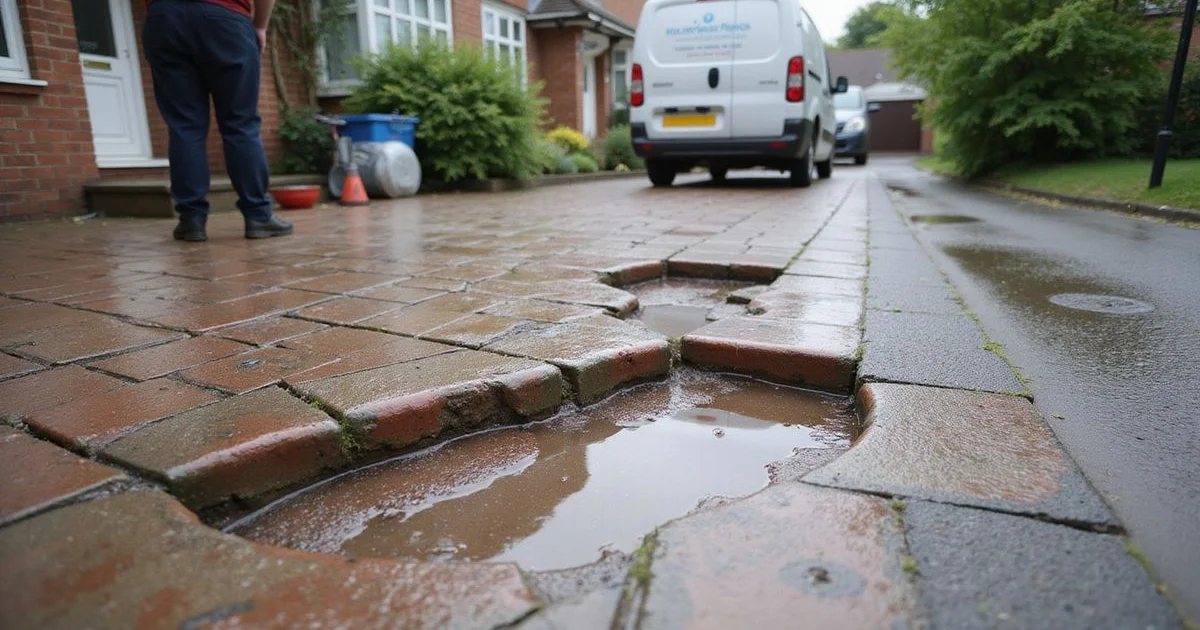
This covers general practical steps, not insurance or structural advice specific to your property; always check your policy and consult a qualified professional for anything affecting your home’s structure.
A driveway or patio that shifts suddenly after bad weather is unsettling, and the first useful step is working out what actually happened before arranging any repair. Storm damage and subsidence look similar on the surface but usually need different responses.
Telling the two apart
| Sign | More likely storm damage | More likely subsidence |
|---|---|---|
| Timing | Sudden, tied to a specific storm or flood event | Gradual, noticed over weeks or months |
| Location | Localised to impact point or a low-lying area | Often near the house, sometimes matching cracks in walls |
| Pattern | Isolated slabs or a washed-out section | A wider dip or tilt across a larger area |
| Associated damage | Debris, washed-away bedding sand, displaced blocks | Cracking in adjoining brickwork or render |
Heavy rain can wash bedding sand out from under paving, especially where drainage was already marginal, causing sudden sinking that looks dramatic but is often a surface-level fix. Subsidence, ground genuinely moving beneath the paving and potentially the house, is a different and more serious problem, often linked to clay soil shrinking in dry spells or expanding after heavy rain, sometimes worsened by nearby tree roots drawing moisture from the ground.
Immediate steps
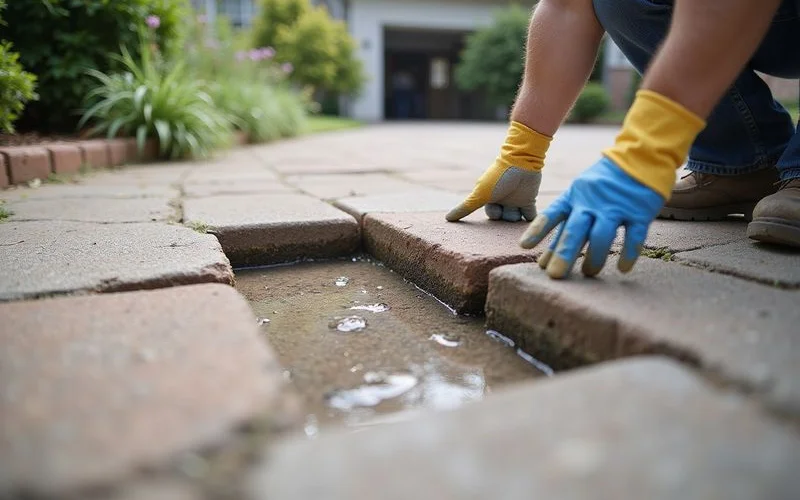
Treat any sudden dip, tilt or displaced section as a trip hazard first. Cordon it off or block access, particularly if children, elderly visitors or deliveries use that route regularly. Take photos and note the date you first noticed it, since this record is useful whether you end up making an insurance claim or simply comparing repair quotes later. A tape measure or a coin placed next to a crack in a photo also gives a useful sense of scale if you need to show a contractor or insurer how the damage has changed over time.
When to bring in a structural engineer
If the affected area is close to the house and you notice matching cracks appearing in the wall, especially ones wider than a few millimetres or growing over time, get a structural engineer’s assessment before any paving repair goes ahead. Fixing the surface without understanding whether the ground beneath the house is also moving can mask a bigger problem rather than solve it.
Insurance, in general terms
Buildings and contents policies vary widely in how they treat hard landscaping. Some cover storm damage to driveways and patios as part of the main buildings cover; others exclude paving specifically or apply a higher excess to it. Subsidence claims typically involve a different process again, often requiring monitoring over time before any repair is authorised. Contact your insurer early, before commissioning repair work, if you think a claim might apply, since work done ahead of their assessment can sometimes complicate the claim.
Reducing the risk of it happening again
Once the immediate repair is done, ask the contractor whether drainage improvements could reduce the risk of a repeat problem, particularly if bedding sand washing out was part of the original damage. A soakaway, a better fall, or a drainage channel along the affected edge can all help water move away rather than pool and undermine the surface again. If nearby trees are a factor in ground movement, that is a longer-term conversation, sometimes involving root management or, in more serious cases, an arborist’s opinion alongside the structural assessment.
Choosing a repair once you know the cause
For storm-related surface damage, a paving repair specialist in Cheltenham can usually assess and fix the affected section directly. For confirmed subsidence, you will likely need any structural remediation completed first, with paving repair following once the ground has been stabilised. Getting the order right avoids paying twice for the same section of driveway. Our methodology page sets out how contractors on this site are ranked, and the Cheltenham Paving Contractor Guide home page lists specialists across every paving category if you need more than one type of expertise.
FAQ
- How do I know if it is storm damage or subsidence?
- Storm damage tends to appear suddenly, after heavy rain, flooding or a falling branch, and is usually localised to where the impact or water occurred. Subsidence develops more gradually, often shows as a wider dip or tilt over weeks or months, and is more commonly linked to ground movement than a single weather event.
- Does home insurance cover a damaged driveway?
- Some policies cover storm damage to hard landscaping, but cover varies significantly between insurers and is often subject to conditions or exclusions. Subsidence claims are typically handled differently and can be more involved. Check your specific policy wording or speak to your insurer rather than assuming either way.
- Do I need a structural engineer for a sunken driveway?
- If the movement is localised to the paving itself, a paving contractor can usually assess and repair it. If the dip extends toward the house foundations, or you notice matching cracks appearing in the building itself, that is worth a structural engineer's opinion before any paving repair goes ahead.
- Is it safe to use a driveway or patio that has shifted after a storm?
- Treat any sudden dip, tilt or displaced slab as a trip hazard until it is assessed. Cordon off or avoid the area, especially in the dark, until you know whether it is a surface-level issue or something more serious.
Related on this site
- Browse paving repair & maintenance providers
- Repair or replace: what it costs to fix vs renew a driveway or patio
- Trip hazards from cracked or uneven paving: what to look for and fix
- Driveway paving before you sell your house: is it worth it
- Commercial and car park surfacing: what to expect when hiring a contractor
- All guides →