Repair or replace: what it costs to fix vs renew a driveway or patio
By Janice · Updated 2026-07-05
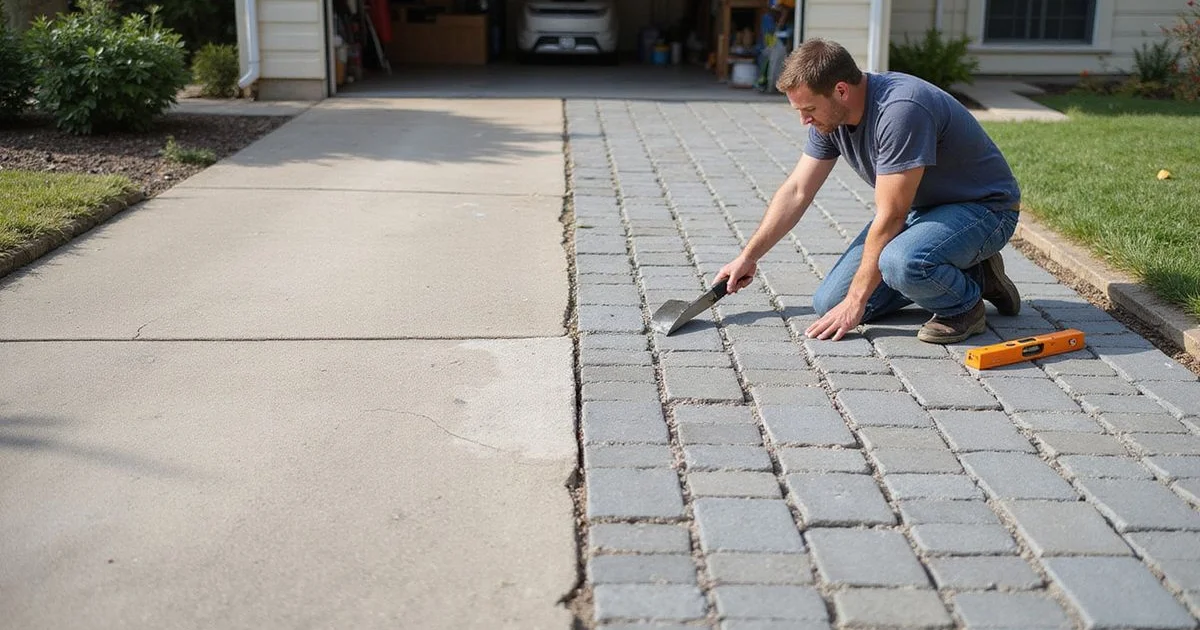
A cracked patio slab or a sunken patch of driveway raises the same question every time: patch it, or start again. The right call depends less on how bad the damage looks and more on what caused it in the first place. If you are getting quotes from paving repair and maintenance specialists in Cheltenham, the questions below should help you walk in with a clearer sense of which answer you actually need.
When repair is the right call
Repair makes sense when the damage is localised and the cause is identifiable and fixable: a single sunken patch from poor compaction in one spot, a cracked slab from a one-off impact, or joints that have washed out in an isolated area. In these cases the rest of the sub-base is sound, and there is no reason to disturb it. A targeted repair, lifting the affected area, correcting the base, and relaying the original or matching material, is usually a small fraction of a full replacement cost.
When replacement is the honest answer
Replacement becomes the better economic choice once damage is widespread, or once the same spot has needed repairing more than once. Recurring problems in the same area almost always mean the underlying sub-base or drainage was never right, and another patch is just delaying the same failure. Wide cracking across tarmac, rippling across a large section of block paving, or a patio where several slabs have moved independently are all signs that the whole surface, not one section of it, needs attention.
| Situation | Usually points to |
|---|---|
| One sunken patch, rest of the surface solid | Repair |
| Same spot failing again after a previous repair | Replacement |
| Cracking spread across most of the surface | Replacement |
| Isolated crack or chip from a single impact | Repair |
| Weeds and washed-out joints over a small area | Repair (re-sand/re-point) |
Working out the real cost comparison
A repair quote should reflect only the affected area: lifting, base correction, and relaying that section. If a repair quote starts approaching half the cost of a full replacement, get a second opinion, since that is usually a sign the contractor expects the problem to be more widespread once they start digging. On the other side, do not assume replacement is always the “proper” choice out of caution. Replacing a driveway that has one legitimate, contained issue is money spent on parts of the surface that were never a problem.
Questions to ask before you commit either way
Ask the contractor to explain what caused the damage, not just how they plan to fix it. A repair that does not address the cause, whether that is drainage, compaction, or ground movement, is likely to fail again in the same place. Ask whether they recommend a repair or replacement and why, and be wary of a contractor who only offers one option regardless of what they find on site.
What a repair actually involves on site
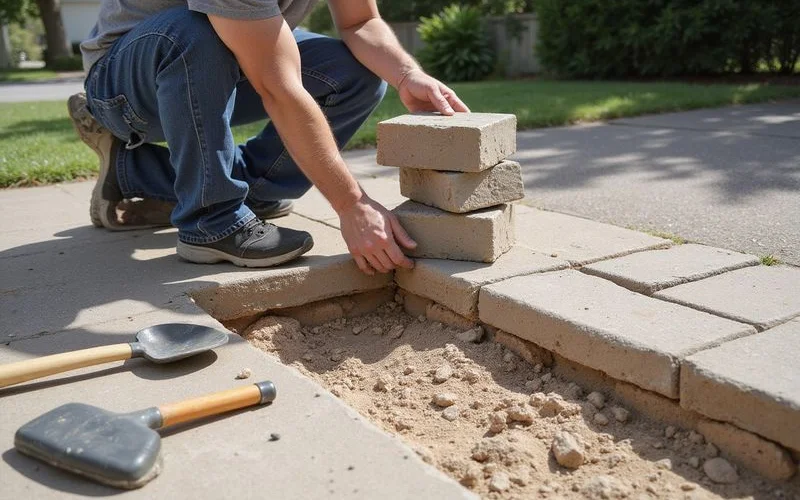
A proper repair goes beyond filling a crack or resetting a few blocks on the surface. For block paving, the contractor lifts the affected blocks, checks and tops up the sub-base underneath, recompacts it, and relays the same blocks so the repair blends in with the surrounding area. For tarmac, small areas can be cut out and re-laid with fresh material bonded to the edges of the existing surface. For patios, an individual cracked slab can usually be replaced on its own, provided a close colour match is available, since older stone can weather to a slightly different shade than new stock.
Getting a second opinion
Given the size of the difference between a repair and a full replacement, it is worth getting at least two assessments before committing to the larger job, particularly if the first contractor moves straight to “replace” without a clear explanation. Our methodology page sets out how contractors on this site are scored, which is a reasonable starting point for finding a second opinion you can trust. You can also browse the full directory from the Cheltenham Paving Contractor Guide home page.
FAQ
- Is it cheaper to repair or replace a driveway?
- Repair is almost always cheaper up front. A patch or partial relay might cost a fraction of a full replacement. The question is whether that repair actually resolves the cause, or just the symptom, of the damage.
- How many repairs are too many before I should just replace it?
- If you have needed two or more separate repairs to the same area within a couple of years, that is usually a sign the underlying base or drainage is the real problem, and further patching is likely to keep failing in the same spot.
- Can cracked tarmac be repaired, or does it need full resurfacing?
- Small, isolated cracks can be sealed or patched. Widespread cracking, especially alligator-style cracking across a large area, usually means the base underneath has failed and patching will not hold for long.
- Does a repaired driveway look as good as a replaced one?
- A well-matched repair on block paving can blend in closely, since the same blocks are often reused. Tarmac and resin repairs are harder to hide completely, since a patch rarely matches the exact tone of surrounding, weathered material.
Related on this site
- Browse paving repair & maintenance providers
- What to do if storm damage or subsidence affects your driveway or patio
- Trip hazards from cracked or uneven paving: what to look for and fix
- What a new patio costs and what changes the price
- What affects the cost of a new driveway (and how to keep it down)
- All guides →