Patio drainage and falls: why it matters and how to get it right
By Janice · Updated 2026-06-29
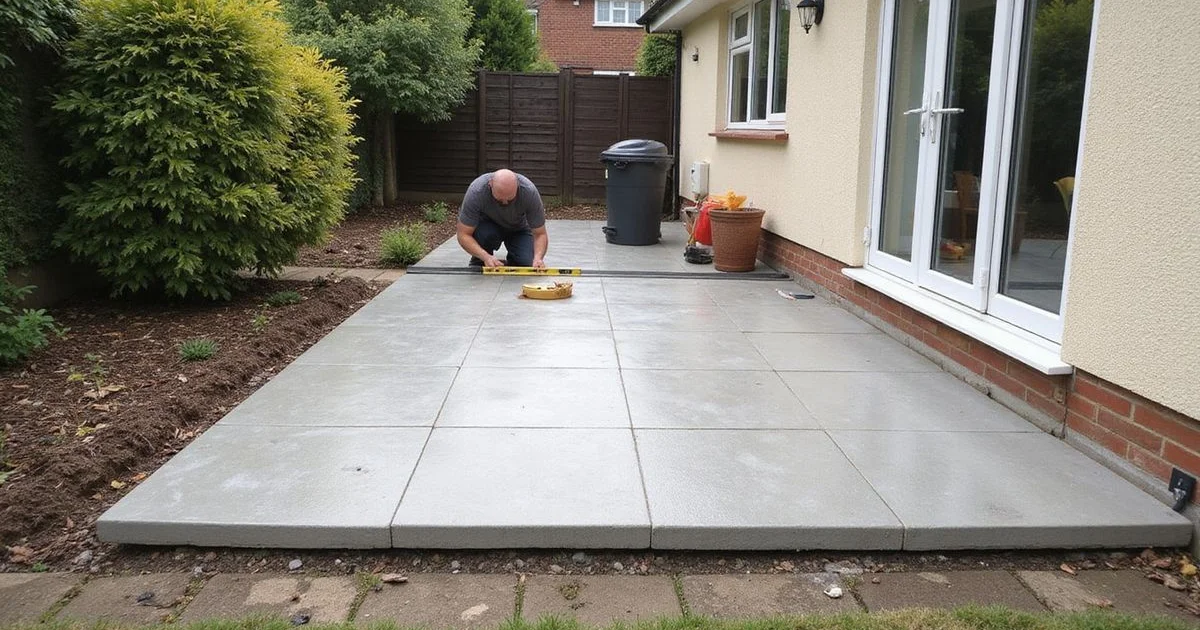
A patio that looks perfectly laid can still cause real problems years later if the fall and drainage were never planned properly. This is one of the least visible parts of a paving job and one of the easiest for a rushed installer to skip, since a flat-looking surface photographs the same whether the drainage is right or not. It is worth raising directly with any patio installer in Cheltenham you are getting quotes from, since it rarely comes up unless you ask.
Why this matters more than it looks
Water that cannot drain away has to go somewhere. On a patio, that usually means it sits on the surface until it evaporates, seeps slowly into joints and the bedding layer beneath, or, in the worst case, finds its way toward the house. A patio laid level with, or above, the property’s damp proof course, and without a fall directing water away from the wall, can push moisture into the building over time. That is a structural issue, not just a cosmetic one.
| Sign of a drainage problem | Underlying cause | Typical fix |
|---|---|---|
| Standing water after rain | No fall, or fall in the wrong direction | Lift and relay with a corrected slope |
| Damp patch on an adjoining wall | Patio level too high against the damp proof course | Lower affected slabs or add a drainage channel |
| Moss or algae building up in one spot | Water pooling repeatedly in a low point | Localised relay of that section |
| Slippery surface in wet weather | Combination of standing water and a smooth finish | Improve fall, consider a textured material |
What a well-planned patio does differently
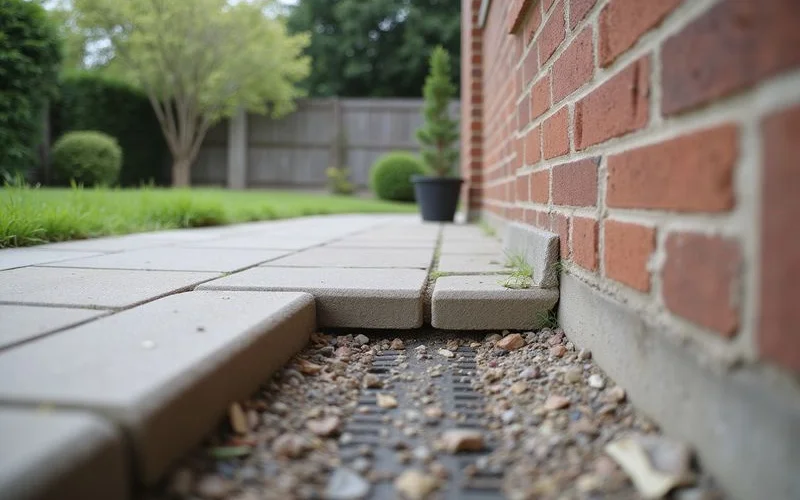
A properly built patio has a consistent fall, often talked about as a ratio such as 1 in 60 or 1 in 80, directing water away from the house toward a lawn, border, drainage channel or soakaway. Where the patio meets the house wall, it should sit at least two brick courses below the damp proof course, giving rainwater and splash-back somewhere to go that is not into the building.
Jointing choice plays a part too. Fully sealed, impermeable joints send all the rainwater to the surface fall, so the slope has to do all the work. Open or permeable joints let some water pass through to the bedding layer and sub-base beneath, which can ease pressure on the fall but only if that base is itself free-draining. Neither approach is automatically better, but a contractor should be able to explain which one they are using and why it suits your garden.
Questions worth asking your contractor
Ask which direction the fall will run and where the water ends up: a lawn, a border, a channel drain, or a soakaway. Ask how far below the damp proof course the finished patio will sit, particularly for a patio built directly against the house. If your garden already has drainage issues, mention it before work starts rather than after, since it may change where the fall needs to run or whether a soakaway needs to be added. It is also worth asking to see the fall marked out with pegs and string before laying begins, so you can see the intended direction of the slope while it is still easy to adjust.
Living with a patio that already has problems
If your existing patio pools water in one or two spots, a localised repair, lifting the area, adjusting the base to correct the slope, and relaying the same slabs, can often solve it without the cost of a full relay. Widespread pooling across most of the surface usually points to a fall that was never built in correctly, which is a stronger case for a fuller relay done properly the second time. If cost is part of what is holding you back from a fuller relay, our guide on what a new patio costs breaks down where the money goes. For a wider look at the materials involved, our methodology page explains how paving contractors on this site are ranked, and the Cheltenham Paving Contractor Guide home page covers patio, driveway and repair specialists across the area.
FAQ
- What is a fall in patio construction?
- A fall, or gradient, is the slight, intentional slope built into the surface so rainwater runs off in a controlled direction rather than sitting where it lands. A typical fall directs water away from the house and toward a lawn, border, drain or soakaway.
- How can I tell if my existing patio has drainage problems?
- Standing water after rain that takes hours to clear, especially near the house wall, is the clearest sign. Green algae or moss build-up in the same spot repeatedly, and damp patches on an adjoining wall, are also common signs of a poor fall or blocked drainage.
- Does a patio need to slope away from the house?
- Yes, this is one of the most important details in the whole job. Water that pools against the house wall instead of draining away can eventually find its way through the damp proof course and into the building, which is a far bigger problem than a patio that needs redoing.
- Can a bad fall be fixed without lifting the whole patio?
- Sometimes, if the problem is localised, a small area can be lifted, the base corrected, and the same slabs relaid with the right slope. Widespread pooling across most of the patio usually means the whole surface was laid without a consistent fall and needs a fuller relay.