Keeping your driveway or patio safe in icy and wet weather
By Janice · Updated 2026-06-20
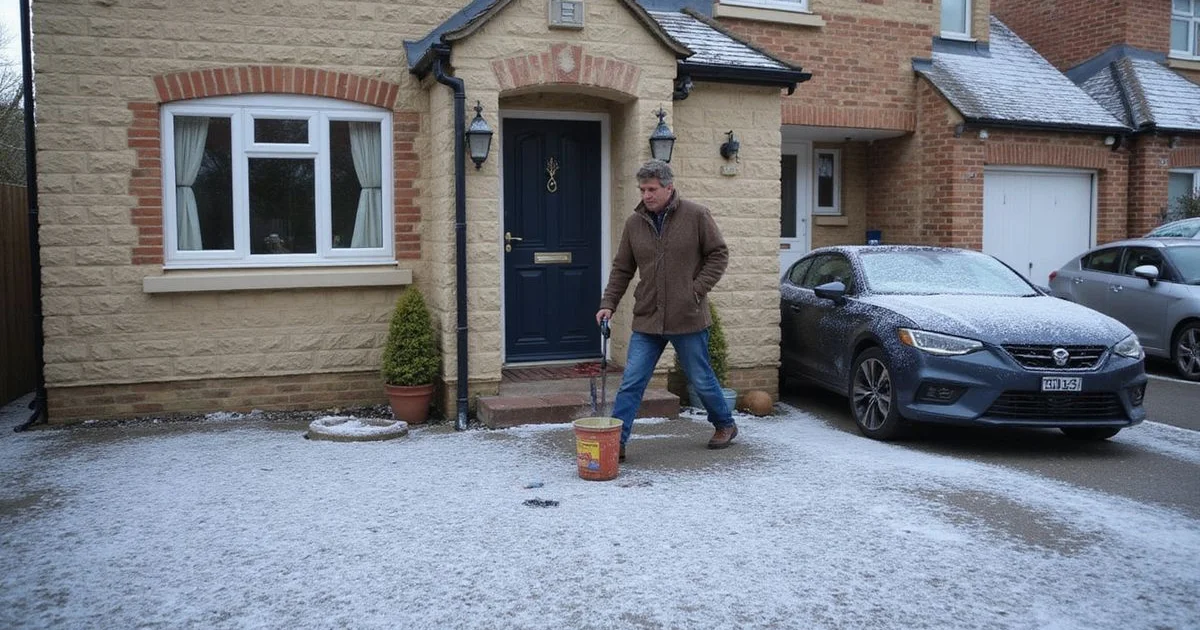
British winters bring a predictable mix of rain, frost and the occasional hard freeze, and a driveway or patio that felt perfectly fine in summer can turn into the most hazardous surface around the house once the temperature drops. Most of the risk comes down to a small number of avoidable factors.
Where the real risk comes from
Ice rarely forms evenly. It builds first in low spots where water has pooled, in shaded areas that stay colder for longer, and on smooth, worn surfaces that hold less texture for grip than they did when new. A driveway with good drainage and a bit of surface texture is meaningfully safer in winter than one that is dead flat, smooth and prone to puddling.
| Hazard | Why it happens | What helps |
|---|---|---|
| Black ice in shaded patches | Areas that get little sun stay frozen longer after the rest thaws | Grit or salt these spots specifically, check them separately from sunnier areas |
| Ice in low, pooling spots | Poor drainage lets water sit and freeze | Improve the fall or add a drain; treat as a priority area in frost |
| Slippery smooth stone | Worn or naturally smooth finishes offer less grip when wet | Consider a textured resurfacing option, or grit consistently |
| Cracking that appears after a cold snap | Water in small cracks freezes, expands, and widens them | Seal minor cracks in autumn before the first hard frost |
Does the surface material make a difference
Permeable surfaces, such as resin bound paving or permeable block paving, let water drain through rather than sit on top, which means there is less standing water available to freeze in the first place. That does not make them immune to ice on a hard freeze, since surface moisture and dew can still freeze regardless of drainage, but it does reduce the number of pooling spots that tend to ice over first. Solid surfaces like tarmac and standard concrete rely entirely on the fall of the surface to move water away, so any weak spot in that fall becomes a reliable ice patch every winter.
Preparing before the cold sets in
Clear moss and algae before winter starts, since a mossy surface holds more moisture and freezes more readily than a clean one. Check that gutters and downpipes are not discharging directly onto the paving, as concentrated run-off in one spot creates a reliable ice patch every time temperatures drop. If you noticed any small cracks over the summer, get them sealed or patched before the first hard frost rather than after, since repeated freeze-thaw cycles are what turn a hairline crack into a real repair.
During cold weather
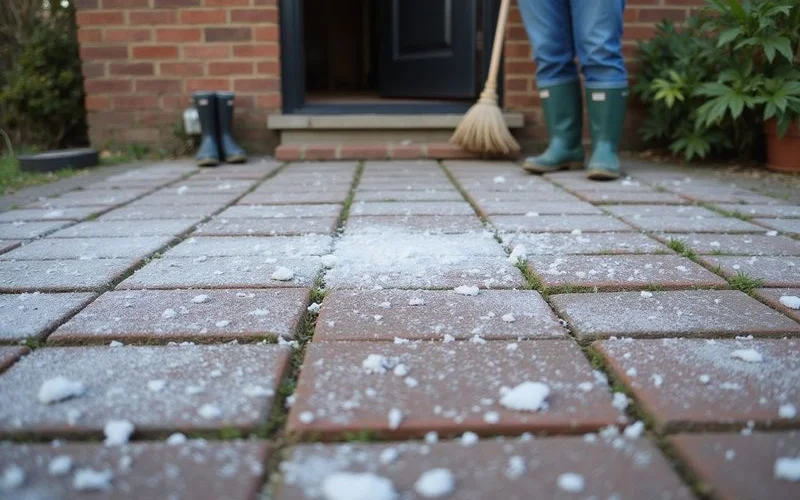
Grit or salt before ice forms where possible, since it is far easier to prevent bonding than to break it afterward. Keep a bag of rock salt or a proper de-icing product somewhere accessible rather than in a shed you cannot easily reach in the cold. Avoid pouring hot water onto ice, since it often refreezes into a thinner, harder and more slippery layer within minutes rather than clearing the problem. Prioritise the path to the front door, the route bins take to the street, and any step or slope, since these are the spots where a slip is most likely to happen and most likely to matter.
After a hard winter
Once the weather turns, walk the driveway and patio and look for any new cracking, particularly around joints or edges, since this is when freeze-thaw damage tends to show up. A slight rocking underfoot on a slab that was previously solid is also worth noting, since it can mean water has worked its way underneath and loosened the bedding. Small issues caught early are a straightforward repair; left through another winter, they tend to grow. Cracked or uneven paving is also one of the more common trip hazards around a home, so it is worth checking properly rather than glancing over. If your patio or driveway needs attention after a hard season, our methodology page explains how contractors on this site are ranked, and the Cheltenham Paving Contractor Guide home page covers every paving category if you need a repair, a resurface, or just a professional opinion on what you are seeing.
FAQ
- What is the safest way to de-ice a driveway or patio?
- Rock salt or a purpose-made de-icer worked in before ice fully forms is more effective than trying to clear ice that has already bonded to the surface. Avoid hot water, since it can refreeze into a thinner but harder layer within minutes.
- Does block paving get more slippery than other surfaces in winter?
- Any smooth, wet surface can become slippery once temperatures drop, but textured or riven finishes generally offer more grip than very smooth porcelain or polished stone.
- Can frost actually damage paving, not just make it slippery?
- Yes. Water that has soaked into small cracks or porous stone can freeze, expand, and widen the crack, a cycle that repeats each freeze-thaw event through winter and can turn a small crack into a larger one over a season.
- Should I avoid pressure washing before winter?
- Not necessarily, but time it so the surface has a chance to dry out before a hard freeze. Pressure washing followed immediately by freezing temperatures can push more moisture into joints right before it expands.