Why block paving driveways sink or shift, and how a good contractor prevents it
By Janice · Updated 2026-07-08
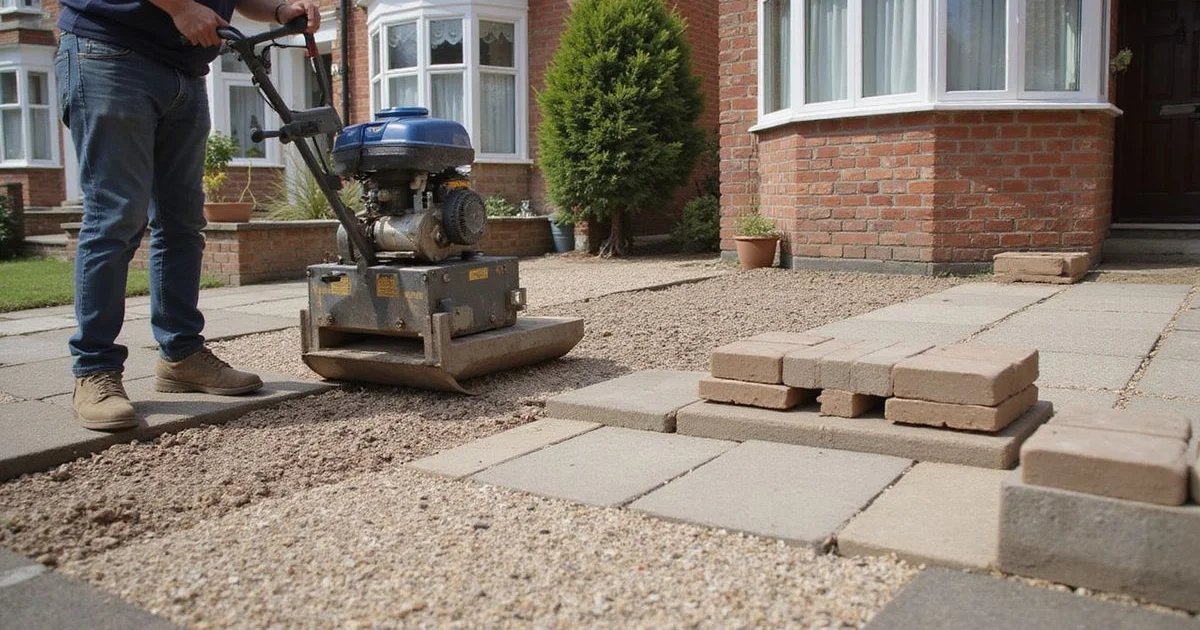
Block paving has a reputation, deserved in some cases, for sinking or shifting within a few years of being laid. That reputation almost always traces back to what happened before a single block went down, not the blocks themselves. If you are choosing between block paving contractors in Cheltenham, understanding what causes these problems is the fastest way to tell a solid quote from a risky one. If you have not settled on block paving yet, our comparison of block paving, tarmac and resin bound driveways covers how each surface holds up over time.
The usual causes
A sub-base that is too thin or poorly compacted. The layer of crushed stone beneath the blocks, typically a graded aggregate like MOT Type 1, needs to be compacted in stages, not laid thick and rolled once. A base that looks fine on day one can still fail under repeated vehicle weight if it was not compacted properly layer by layer.
Missing or weak edging. The row of blocks or kerbs around the perimeter, backed by a concrete haunching, exists to stop the whole surface spreading sideways under load. Skip it, or install it loosely, and the edges creep outward over time, which is often the first visible sign something is wrong.
Poor drainage under the surface. Water that pools instead of draining away can wash bedding sand out from under the blocks, creating the hollow that later becomes a sink spot. This is more common on driveways with a poor natural fall or a blocked drainage route.
Root intrusion and ground movement. Tree roots near the driveway, or naturally shifting clay soil, can push a section of sub-base out of position regardless of how well it was built. This is less common but worth asking about if there are established trees nearby.
| Warning sign | Most likely cause |
|---|---|
| A dip in one patch, rest of the drive fine | Localised poor compaction or drainage |
| Edges spreading or blocks tilting outward | Missing or failed edging/haunching |
| Whole sections rippling under weight | Sub-base too thin for vehicle load |
| Weeds pushing up between blocks | Joint sand washed out or never fully filled |
What a good contractor does differently
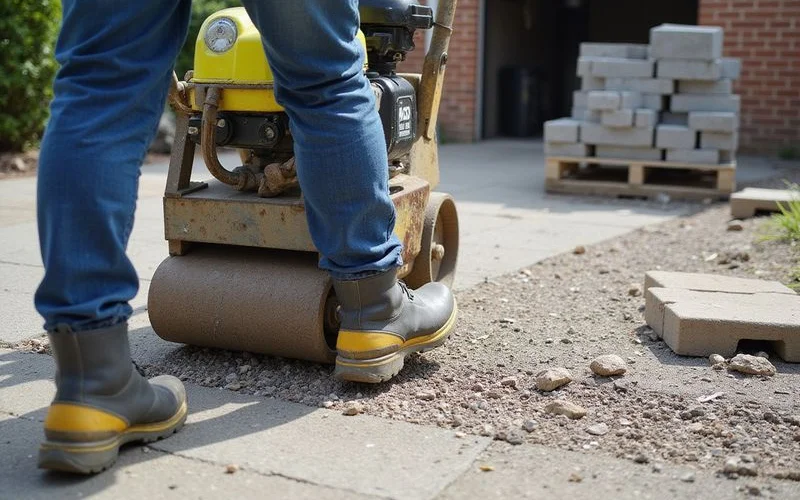
A contractor confident in their work will tell you the sub-base depth before you ask, usually 100-150mm for a domestic driveway and more for vehicles heavier than a standard car. They will compact it in layers with a plate compactor rather than in one pass, install a proper edging course with haunching behind it, and finish with kiln-dried sand fully worked into every joint, not just brushed over the top.
Questions to ask before you book
Ask what depth of sub-base is planned and whether it changes for areas that will carry a car versus a path that only takes foot traffic. Ask how the edging will be secured, and whether haunching is included as standard. Ask what happens if drainage on your specific site looks marginal, since a contractor who has clearly assessed your ground rather than quoting a generic price is the one more likely to get it right first time. It is also worth asking what workmanship guarantee is offered and for how long, since a contractor confident in their base preparation will usually stand behind it for several years rather than a token few months.
If it is already happening to you
A single sunken patch does not usually mean the whole driveway needs replacing. A contractor can often lift the affected blocks, top up and recompact the base beneath, then relay the original blocks so the repair blends in. Widespread rippling or edges that have spread significantly is a different problem and may point to a base that was never adequate, in which case a proper relay is the more honest fix, even if it costs more up front than another patch repair. Our methodology page explains how we score the contractors listed on this site, which is worth a look before you get quotes for either a repair or a full relay. You can also browse the wider directory from the Cheltenham Paving Contractor Guide home page.
FAQ
- Why do some patches of my block paving sink lower than the rest?
- Almost always uneven compaction of the sub-base beneath that patch, sometimes made worse by water collecting there and washing out the bedding sand underneath over time.
- Can sunken block paving be fixed without redoing the whole driveway?
- Often yes. A contractor can lift the affected blocks, top up and recompact the sub-base, then relay the same blocks. It is a much smaller job than a full relay, provided the rest of the base is sound.
- Is block paving shifting normal after a year or two?
- No, not on a properly built driveway. Some very minor settlement in the first few months can be normal, but ongoing shifting, spreading edges or a rippling surface usually points to a base or edging fault.
- How do I know if a contractor is cutting corners on the base?
- Ask for the sub-base depth in writing and whether they compact it in layers rather than one pass. A contractor who cannot answer specifically, or who plans a noticeably thin base for the load the drive will carry, is a risk worth avoiding.